
All In or Slow and Steady? Learning to Slow Down in a Fast-Paced World
Are you an all-in person? Or are you more of a test-the-waters, slow-and-steady kind of person?
I am most definitely an all-in person. I rarely dabble. When something catches my interest, I tend to dive headfirst into the deep end. I want to learn everything, try everything, and often own everything that seems connected to whatever has captured my attention.
There is a lot to love about being wired this way. I'm curious, enthusiastic, and willing to put in the work. When I'm interested in something, I want to learn everything I can—podcasts, books, blogs, YouTube videos, you name it. And when I have a project to tackle, that intensity can help me focus and actually get the thing done.
But I've also learned that my all-in personality doesn't always pair naturally with simple living.
I learned this during what I affectionately call my "thrifting era." I had already begun my journey toward simplicity when I discovered thrifting, and what started as a way to find useful and beautiful things secondhand quickly became a full-time hobby. I was constantly looking for the next amazing find. Because things were inexpensive, it was easy to convince myself I was being frugal.
But inexpensive does not mean free. And eventually, all those little purchases added up—not just in money spent, but in stuff to store, organize, manage, and eventually decide what to do with. The very thing I had embraced as part of my simpler life had created more clutter for me to deal with.
A couple of years later, I found myself decluttering nearly all of those amazing finds. I kept the things I truly loved and used, but much of what I had enthusiastically brought into my home eventually left it again.
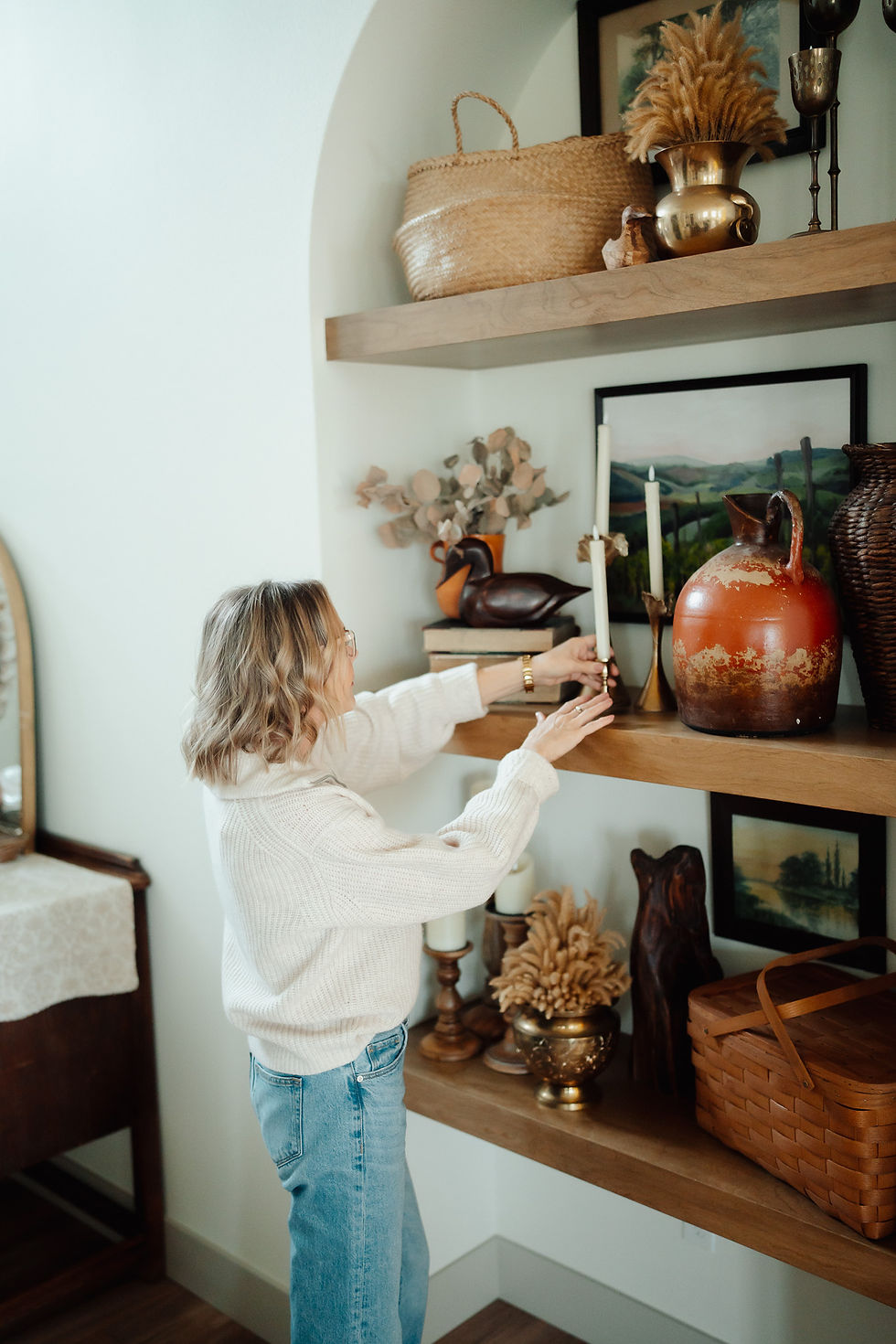
That was a powerful reminder that decluttering isn't always about getting rid of the things we no longer want. Sometimes it's about recognizing the decisions that brought too much into our lives in the first place.
That experience was a little humbling, but it taught me something I still think about today: sometimes our greatest strength, left unchecked, can become our greatest stumbling block. My enthusiasm wasn't the problem. I simply needed to learn when to temper it with a little patience and wisdom.
And that's what got me thinking about the difference between going all in and taking the slow-and-steady approach. Because simple living isn't about becoming less curious, less enthusiastic, or less willing to try new things. It's about being intentional enough to know when to dive in—and when to pause before we do.
What If We Tested the Waters Instead?
This is where I've come to appreciate the slow-and-steady approach. Imagine that you've never run a mile in your life, but you decide you're going to run a marathon by spring break.
You buy the shoes, the running clothes, the training app, the supplements, and all the other accessories the internet tells you a serious runner needs. You start running five days a week with tremendous enthusiasm. And by the end of January, you're exhausted, injured, discouraged, or simply over it.
You spent hundreds of dollars and completely burned yourself out before you ever had the opportunity to discover whether you actually enjoyed running.
A slow-and-steady approach might look very different. "I'd like to add running to my life because I want to be healthier." So you start with a run/walk three times a week. You do that consistently for a while, then gradually increase your distance or frequency. Maybe your first goal is a 5K, followed by a 10K or half marathon. And if a marathon remains a meaningful goal after all that, you can work toward it.
But somewhere along the way, you may discover that the marathon wasn't really the point. Maybe what you actually love is getting outside, moving your body, feeling stronger, or having quiet time in nature.
Sometimes dabbling reveals the desire underneath the desire.
The Wisdom of Waiting
I've been practicing this kind of slow-and-steady approach more intentionally in my own life.
Recently, I went into an antique store for the first time in more than a year. I wasn't there to see what I could find. I was looking for two specific things: an ironstone pitcher and a wicker laundry basket to replace an ugly plastic one.
I walked in with a small, specific goal and found what I was looking for. I also saw a set of antique metal folding chairs that immediately had my heart. The old me might have thought, "I will never see these again! I have to get them now!" But the newer me walked away. I put them on my wish list on my phone instead.
Maybe I'll still want them in a month. Maybe I won't. And if they're gone by then? There will be other chairs.
That experience reminded me that I don't have to make every decision immediately. In fact, creating a little space between wanting something and purchasing it has become one of the most useful tools in my simple-living toolbox.
Maybe your rule is 24 hours for purchases over $50, or a week for something more expensive. Maybe you keep a running wish list on your phone. Whatever system you choose, the goal is the same: give yourself enough time to determine whether you genuinely want or need something, or whether you're simply caught up in the excitement of the moment.
The same principle applies when we're taking on a new hobby or interest. Before rushing out to purchase all the equipment, see if you can borrow what you need from a friend or family member and give the hobby a test run. Go ahead and research it, listen to the podcasts, read the books, and learn everything that interests you. But let your purchases catch up with your enthusiasm.
And when you do decide something is worth pursuing, you don't necessarily need to buy it brand new. Check thrift stores, antique stores, Facebook Marketplace, online secondhand groups, or simply ask your friends.
Just recently, my daughters needed a water flosser because they both have braces. I was about to open Amazon and add one to my cart when I stopped myself. "Check with your friends first." So I sent out a quick text asking if anyone had one they no longer needed. Sure enough, a friend had a brand-new water flosser, still in the box, that she had purchased years ago and never used.
She was happy to pass it along. I got what we needed, saved some money, and interrupted my automatic "I need this, so I'll buy it" response.
Our Culture Wants Us to Hurry
And this is particularly important because we live in a culture that is constantly encouraging us to do the opposite.
Buy now.
Limited quantities.
Only six left!
Sale ends tonight!
Don't miss out!
Social media adds another layer. Someone we follow tells us, "This changed my life!" or "I'm completely obsessed with this!" Suddenly, something we had never heard of five minutes ago is sitting in our shopping cart.
I have absolutely fallen into this trap. I've had things added to my cart within minutes that I had never previously heard of, much less identified as something I needed.
That's why I think the simple act of slowing down is so powerful. If we take a little time to think about something, we might decide we don't actually need it. That isn't failure. That's wisdom.
When Going All-In Makes Sense
Now, I don't want to paint the all-in approach as the villain. There are absolutely times when going all-in is beneficial.
Recently, a friend and I tackled a large storage room in her home that had become completely cluttered and overwhelming during a particularly full season of life. We had actually talked about the project for about a year. She knew she didn't have the time or mental capacity to tackle it until this fall.
Once the time came, we went all in. We worked for two and a half long days and completely transformed the space.
Could she have spread the project out over several months? Absolutely. But in this particular situation, our focused approach worked beautifully. We had a clear goal, a defined window of time, and a massive project that benefited from concentrated attention.
Sometimes fast and furious is exactly what the situation calls for.
There are other situations where deep research is appropriate, too. Maybe you're navigating a difficult season of life and need to understand your options. Maybe you're making an important decision and need to learn everything you can before moving forward. In those situations, immersing yourself in information can be wise and necessary. The key is knowing when intensity serves you and when it works against you.
Simple Living Is About Intentionality
I sometimes think people hear words like simple living or minimalism and assume it means never buying anything, never trying anything new, or living with as little as possible.
That's not what I mean.
Simple living is about intentionality. It's about being thoughtful about what we bring into our homes, our schedules, our relationships, and our lives. It's about recognizing that our time, energy, money, attention, and physical space are all finite resources.
The slow-and-steady approach creates room to ask: Do I really want this? Is this adding value to my life? Will I still want this six months from now? Or am I simply excited right now? Those questions don't mean we have to say no. They simply give us the opportunity to say yes with intention.
Know Yourself—and Work With Yourself
I don't think there is a right or wrong personality here. Some of us are naturally cautious and methodical. Others are passionate, intense, and enthusiastic. But there is wisdom in understanding how we're wired and recognizing where our natural tendencies can lead us astray.
I have learned that I don't need to beat myself up over my thrifting era. I can look back and say, That was fun. I learned a lot. I found some things I still love. And I can also say, I don't want to repeat it. That's the beauty of reflection. Our past experiences can become data. We can learn from what worked, what didn't, where we overspent, where we burned ourselves out, and where we made decisions we later regretted. Then we can use that information to make better choices moving forward.
For me, that means limiting the marketing coming at me, muting or unfollowing accounts that regularly tempt me to buy things I don't need, and giving myself permission to wait. Learn first, buy later. Let my purchases catch up with my enthusiasm.
I don't want to lose my curiosity or my excitement about new things. Those are qualities I genuinely love about myself. I simply want to be more intentional about where I direct them. When something truly requires me to go all in, I'll go all in. When something would benefit from patience and time, I'll slow down.
Because very few decisions in life—and certainly very few purchases—are truly emergencies, despite what the blinking BUY NOW button might want us to believe.
We only get this one life. I want to live it fully, stay curious, embrace new experiences, and spend my time, energy, money, and attention on what genuinely adds value to my life. So I'll keep the enthusiasm—but I'll add a pause. I'll keep trying new things—but I'll give myself time to decide what deserves to stay. And I'll keep going all in when the moment calls for it—but I won't let urgency make the decision for me.
Sometimes the simplest choice is to give our enthusiasm time to meet our wisdom.
Simply,
Stefani


Comments